

Shopify's free agentic-readiness scanner: what it tests
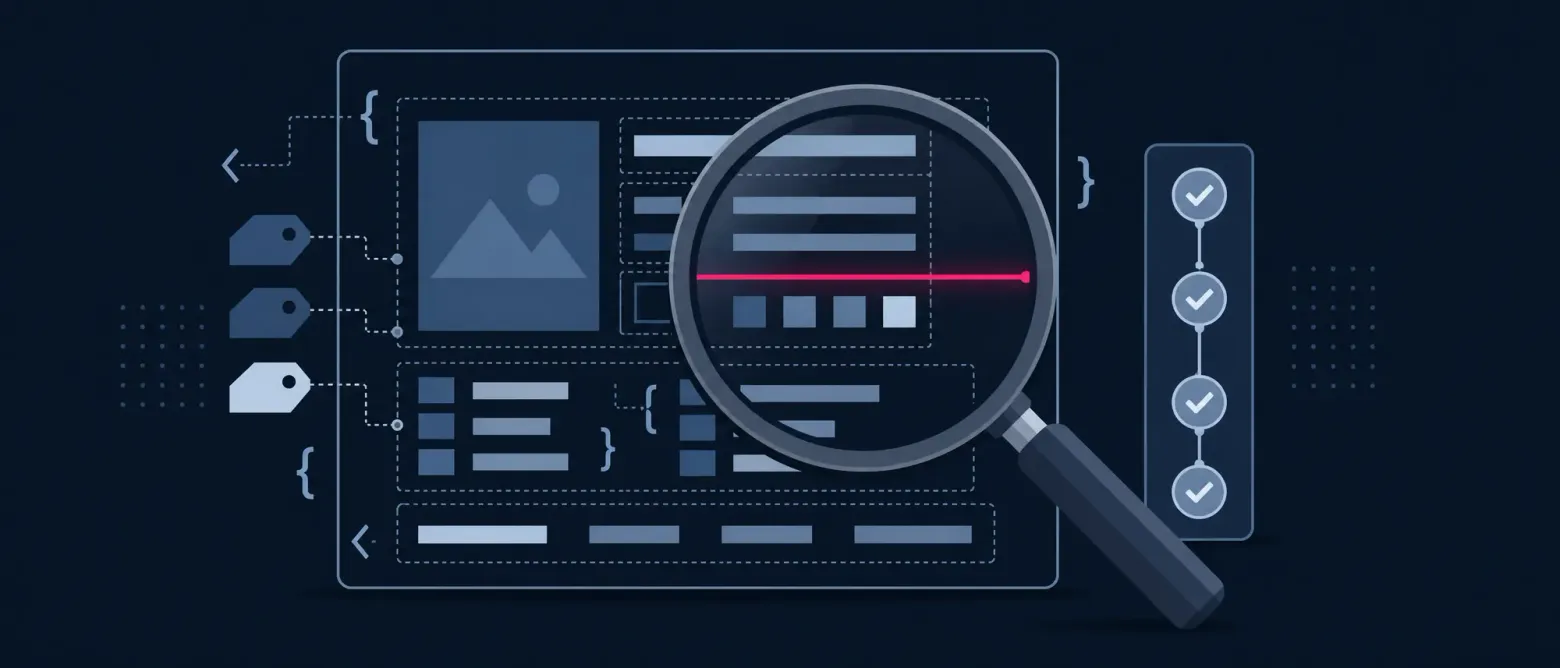
Shopify’s free agentic-readiness scanner, live at shopify.com/agentic-readiness since 28 April 2026, checks one thing: whether your product page exposes the structured data that AI shopping agents read. It is a no-login URL scan, not a verdict on whether ChatGPT or Copilot will recommend you. Reviews, price and returns still decide that. Here is what the scan tests, and what it leaves to you.
What is Shopify’s agentic-readiness scanner?
It is a free tool that reads your product page and reports whether the data AI agents need is present and machine-readable. You paste a URL, it scans, and you get a result. Shopify’s own page frames it plainly: “Is your product page optimized for AI selling? We check your product page for the structured data that AI agents read to answer shoppers’ questions” (Shopify). No account, no install, no Shopify plan required to run it against any public store.
The tool sits alongside Shopify’s Spring ’26 Edition, which opened the Universal Commerce Protocol and Catalog API to every store on 17 June 2026. The scanner is the diagnostic; the protocols are the plumbing.
Does it really run “31 checks”?
The “31 checks across five categories” figure is third-party, not Shopify’s own published number. It comes from independent teardowns reported by Shopifreaks on 28 April 2026, grouping the checks as AI discoverability, product schema, transaction readiness, trust signals and operational maturity. Shopify’s public page states no count, so treat 31 as scope guidance, not an official spec.
A technical teardown by WISLR Research found the scan fires roughly 45 requests across 41 distinct URLs in about seven seconds, covering discovery files, sitemaps, the catalogue, product pages and policies.
Mind the “31 checks” figure. That count comes from third-party teardowns, not Shopify’s own published spec – Shopify states no number. Treat 31 as scope guidance, not an official benchmark.
What does the scanner actually test?
It tests technical, machine-readable readiness only. Each category maps to a question an AI agent asks before it can use your store, and the scan can answer all of them by reading HTML.
| Category (third-party labels) | What it inspects | A UK store example |
|---|---|---|
| AI discoverability | Can crawlers find and read your store: robots rules, sitemaps and discovery files | GPTBot and ClaudeBot are not blocked in robots.txt |
| Product schema | Product/Offer structured data present and complete | Price, availability and GTIN in JSON-LD, not just on-screen text |
| Transaction readiness | Purchase flow and policies exposed as data, not just human pages | Delivery and returns terms in structured markup |
| Trust signals | Review and rating data that agents can parse | AggregateRating in JSON-LD, not a star image |
| Operational maturity | Consistency and completeness across the catalogue | No missing variants or orphaned product URLs |
Category labels and grouping: Shopifreaks, 28 April 2026. None of it judges whether your offer is any good.
What does it not test, and why does that matter?
It does not test whether an AI agent will choose you. The scan measures technical readiness; the surface still picks winners on competitive signals it cannot read from your markup.
A store can score a perfect 100 with no reviews and a four-week shipping window and lose to a store scoring 70 with 800 reviews and two-day delivery.
Review volume, price competitiveness, conversion rate and return rate decide surfacing, and the scanner reads none of them. A clean score gets you into the running; your product, pricing and service decide the rest. Your returns terms must also meet UK law however you mark them up: under the Consumer Contracts Regulations, most online shoppers have 14 days to cancel and 14 days to return.
How should a UK Shopify store use it?
Run it as a free baseline, fix what it flags, then work on the signals it ignores. The scan quickly finds missing structured data: absent Product schema, an unexposed returns policy, a blocked crawler. Those are real AI-search visibility gaps worth closing this week.
Then look past the score. A green readiness report will not move thin reviews or slow delivery up an AI recommendation. Structured data makes you legible; the offer makes you chosen. Our agentic commerce guide for UK Shopify stores covers the data-hygiene work in depth, and our note on the Spring ’26 UCP and Catalog opening explains the protocols the scanner checks you against.
Ready to get your store agent-ready?
We will turn the scan’s flags into a prioritised fix list for your UK store.
Frequently asked questions
Is Shopify's agentic-readiness scanner free?
Yes. The scanner at shopify.com/agentic-readiness is free and needs no login or Shopify plan. You paste any public store URL and it returns a readiness result in seconds. It launched on 28 April 2026 and checks the structured data AI shopping agents read to answer shopper questions.
Does the scanner really run 31 checks?
The "31 checks across five categories" figure comes from third-party teardowns, not Shopify's own published spec. Shopify's page does not state a number. Independent reviewers group the checks as AI discoverability, product schema, transaction readiness, trust signals and operational maturity. Treat 31 as scope guidance, not an official count.
Will a high readiness score get my products into ChatGPT or Copilot?
Not on its own. The scanner tests technical readiness only. AI surfaces still pick products on competitive signals it cannot read: review volume, price, conversion and return rate. A perfect score with no reviews and slow shipping can lose to a lower-scoring store with strong reviews and fast delivery.
What should I fix first after running the scan?
Close the structured-data gaps it flags: unblocked AI crawlers, complete Product and Offer schema, machine-readable delivery and returns policies, and review data in JSON-LD. These are concrete ai search optimisation fixes. Then improve the off-page signals the scan ignores, such as review volume and delivery speed.
Related reading
Google's new rule on review-for-discount schemes
Google now bars undisclosed incentivised reviews from review markup. What a UK store running a review-for-discount offer stands to lose, and the fix.
11 August 2026 6 min read
Google AI Mode and AI Overviews: the UK Shopify job now
Google AI Overviews now hit 14% of shopping queries and AI Mode has been live in the UK since July 2025. What UK Shopify stores must do to stay discoverable.
23 June 2026 4 min read

Shopify Spring '26: UCP and Catalog open to every store
Shopify's Spring '26 Edition opens UCP and the Catalog API to every store, putting your products inside AI chat. What it means for UK shops.
21 June 2026 4 min read