

Royal Mail's new surcharges: what peak costs you
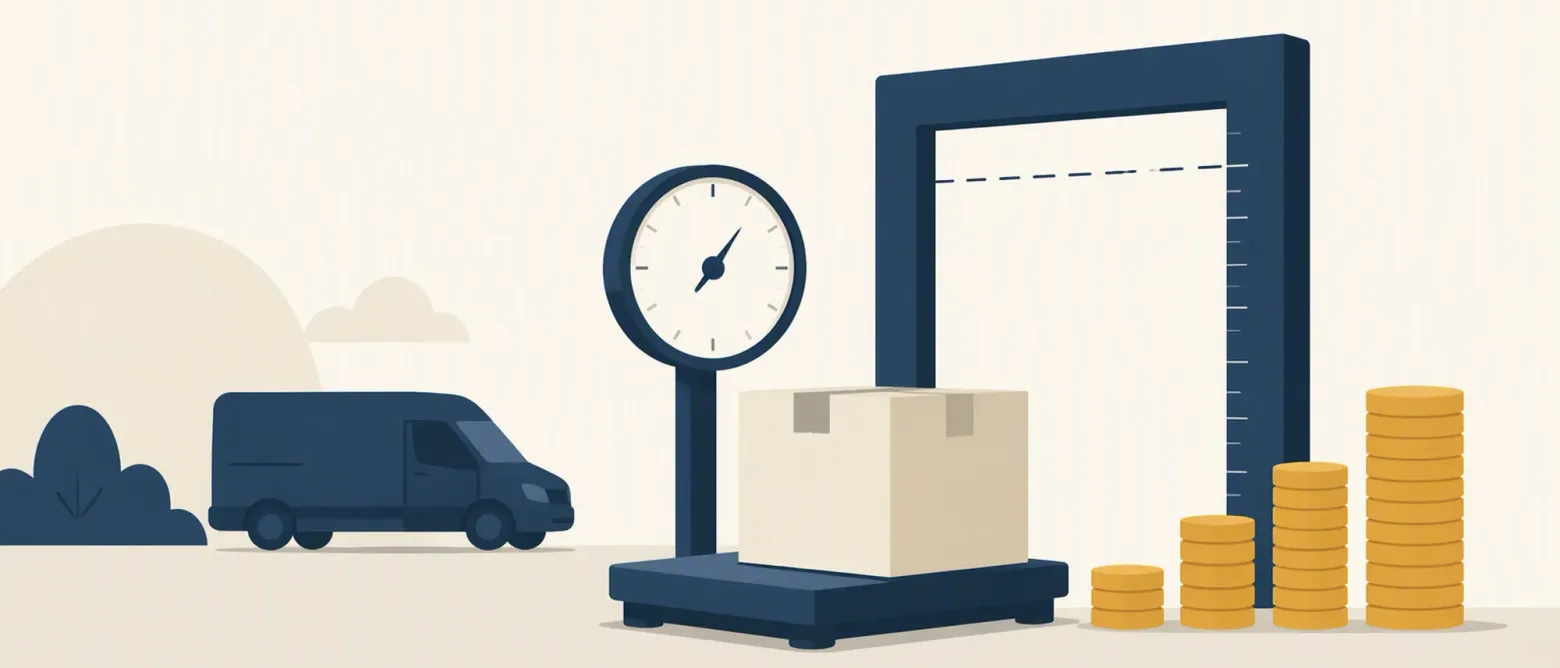
Five Royal Mail changes landed across 2026 and stack up ahead of peak, the latest in the business account terms on 3 August. A surcharge is an extra charge on top of headline postage. The Fuel and Energy Surcharge rose from 11% to 16%, the notice period for future changes halved to 14 days, incorrectly presented Tracked parcels at Parcelshops attract a charge, oversized Tracked returns carry £11, and peak collections are capped.
This is for UK merchants who ship on a Royal Mail or Parcelforce business account — the decision-maker setting shipping prices, not the shopper paying them.
What changed in Royal Mail's business terms?
Five changes landed across 2026, each on its own date, and together they raise the real cost of an account parcel while capping how much volume Royal Mail will collect at peak (Royal Mail terms changes).
| Change | Effective from | What it means for you |
|---|---|---|
| £11 correction charge on oversized Tracked returns | 7 April 2026 | Returns over 20kg, 129 litres or 610×460×460mm cost £11 extra each |
| Fuel and Energy Surcharge up from 11% to 16% (Parcelforce 8% to 13%) | 3 May 2026 | Five percentage points added to the postage of in-scope account services |
| Surcharge notice period cut from 30 days to 14 | With the May 2026 changes | Half the warning before the next rate change reaches your invoices |
| Surcharge on incorrectly presented Business Account Tracked items at consumer points (e.g. Parcelshops) | 3 August 2026 | An item that does not meet the presentation terms for that drop-off carries the charge; check the Parcels User Guide for what qualifies |
| Peak collection cap | November–December 2026 | Collections capped at three times your average non-peak collection size |
None of these shows up in your rate card. They arrive as surcharges and correction charges on the invoice, which is why stores that price shipping from the headline rate undercharge without noticing — the same invoice-level pattern as Meta's 2% UK location fee.
How much more does the fuel and energy surcharge cost?
The Fuel and Energy Surcharge is a percentage Royal Mail adds to the postage of the account services listed on its surcharges page. On 3 May 2026 it rose five percentage points on both networks.
| Network | Before 3 May 2026 | From 3 May 2026 | Rise |
|---|---|---|---|
| Royal Mail | 11% | 16% | +5 points |
| Parcelforce Worldwide | 8% | 13% | +5 points |
What that does to a monthly postage bill, assuming your services are in scope (check yours against the surcharges page — not every service carries it):
| Monthly account postage | Surcharge at 11% | Surcharge at 16% | Extra per month | Extra per year |
|---|---|---|---|---|
| £500 | £55 | £80 | £25 | £300 |
| £2,000 | £220 | £320 | £100 | £1,200 |
| £5,000 | £550 | £800 | £250 | £3,000 |
The rise itself is not the only problem. The notice period for future surcharge changes fell from 30 days to 14 in the same round, so the next move gives you two weeks to reprice shipping, adjust a free-delivery threshold or shift volume to another carrier before it bills.
What is the new Parcelshop drop-off surcharge?
From 3 August 2026, a Business Account Tracked item incorrectly presented at a consumer drop-off point — a Parcelshop, for example — attracts a surcharge on top of the postage (Royal Mail terms changes). The consumer drop-off network was priced for consumers; account parcels routed through it now cost extra.
Royal Mail's surcharges page puts this at £11.25 per item — a £10.00 surcharge plus a £1.25 administration charge — for each incorrectly presented Business Account Tracked item, effective 3 August 2026. Check the page before budgeting on it, because these charges change. The operational point stands either way: if your dispatch routine, or a fulfilment partner's, leans on Parcelshop drop-offs for account parcels, each one now carries a charge that a collection or a Customer Service Point drop-off does not.
What is the £11 correction charge on Tracked returns?
From 7 April 2026, a Tracked returns parcel that exceeds any of the service limits — 20kg in weight, 129 litres in volume, or 610mm × 460mm × 460mm — attracts an £11 correction charge. You do not control what a customer stuffs into a returns bag, but you do control the returns instructions and packaging you offer. A store selling bulky goods that sees one oversized return a week is looking at roughly £570 a year in correction charges, invisible until the invoice.
How does the peak collection cap affect November and December?
Across November and December, Royal Mail caps peak collections at three times your average non-peak collection size. For a steady-volume store that cap is irrelevant. For a store whose Black Friday week runs at five or six times normal volume — which is the point of Black Friday — it is a hard ceiling on how much Royal Mail will take at your door.
The time to deal with it is now, not November: establish what your average collection size is on Royal Mail's measure, forecast your peak weeks against three times that figure, and if you expect to exceed it, talk to your account manager or line up an overflow carrier before everyone else does the same in October.
What should a UK Shopify merchant do before peak?
Reprice from the invoice, not the rate card. In order:
- Pull your last three months of Royal Mail invoices and work out your real per-parcel cost including the 16% surcharge — then re-check any flat-rate shipping price or free-delivery threshold against it.
- Confirm which of your services carry the Fuel and Energy Surcharge on the surcharges page, and check the current Parcelshop drop-off figure while you are there.
- Audit how your parcels physically enter the network. If account Tracked items go in via Parcelshops, cost that route against collections.
- Cap oversized returns at source: state the size and weight limits in your returns instructions and send appropriately sized packaging for bulky items.
- Forecast peak volume against three times your average collection and raise it with Royal Mail now if you will exceed it.
- Diary a fortnightly check of Royal Mail's surcharge announcements — 14 days' notice means an annual review no longer catches changes in time.
Shipping is usually a store's largest cost after stock, and these changes move it mid-year with peak approaching. An hour spent repricing now protects margin on every parcel of the busiest quarter.
True Noise is a UK digital agency in Peterborough working with small UK businesses on the numbers behind their stores — from shipping and pricing to the tracking that shows whether either is working.
Keep peak margin where you can see it
We will work through your account terms, your parcel profile and where the surcharges actually land, then tell you what to change before peak.
Shipping is one line in a wider cost picture. The same discipline applies to the fees that ride on every order — we covered one when Meta added its 2% UK location fee, a charge that shows only on the invoice and so runs unnoticed. If these numbers are pushing you to re-price, that is conversion and pricing work; if it is your store setup that needs to change, see e-commerce stores.
Frequently asked questions
When did these Royal Mail changes take effect?
They arrived in stages through 2026. The £11 correction charge on oversized Tracked returns applies from 7 April, the Fuel and Energy Surcharge rise to 16% from 3 May, and the updated business terms — including the surcharge on Business Account Tracked items incorrectly presented at consumer points such as Parcelshops — from 3 August. The peak collection cap applies across November and December.
Is the fuel and energy surcharge added on top of the headline price?
Yes. The Fuel and Energy Surcharge is a percentage added to the postage of in-scope Royal Mail account services, so the price in your rate card is not the price you pay. At 16% a £4 parcel rate becomes £4.64. Check Royal Mail's surcharges page for exactly which of your services carry it, because the answer decides your real per-order shipping cost.
How much notice will Royal Mail give before the surcharge changes again?
Fourteen days. Alongside the May 2026 rise, Royal Mail cut the notice period for future surcharge changes from 30 days to 14. That halves the time you have to reprice shipping, update any free-delivery threshold or renegotiate before a new rate reaches your invoices, so surcharge announcements are now worth a standing fortnightly check — a monthly one can miss a change entirely.
What are the size limits for Tracked returns, and what happens if I exceed them?
The limits are 20kg in weight, 129 litres in volume, and 610mm x 460mm x 460mm in dimensions. From 7 April 2026, a Tracked returns item over any of those limits attracts an £11 correction charge on top of the postage. For a store whose returns include bulky items, one oversized parcel a week is roughly £570 a year in correction charges alone.
Related reading

Posting to the US just got more expensive
From 24 July 2026 goods posted to the US go through a new CBP informal entry process and can be assessed for full US tariffs. Who pays, and what to check.
14 August 2026 6 min read

Card fees compared: Shopify, Stripe and PayPal
UK card processing costs compared from the three published rate cards, with a worked example, the plan crossover point and the fees nobody reads.
11 August 2026 6 min read
The total cost of running a Shopify store in the UK
What a UK Shopify store really costs each month in 2026: plan fees, card rates, the third-party transaction fee, apps, and a worked example to copy.
11 August 2026 7 min read